“The tragedy is over, Platonov”
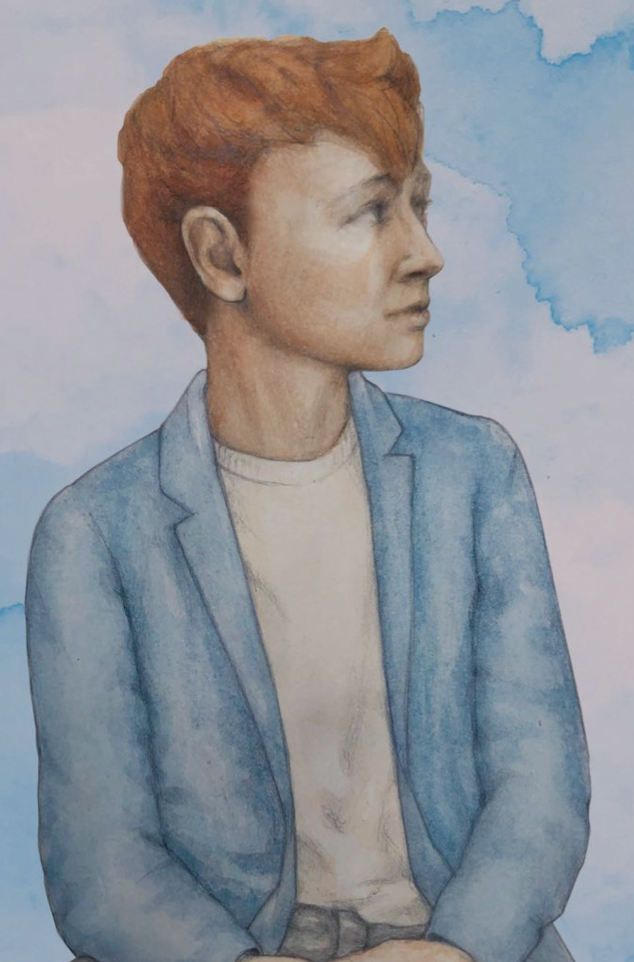
Written for Stormi. Traiettorie sugli Artisti associat, issue 2, 2022
Issued by Piccolo Teatro di Milano
Encountering the characters of a work and their stories has the power to illuminate corners of one’s inner life that had until then remained in darkness. For this to happen, the spectator or reader must relinquish a portion of their vital essence to the dramatis personae. An intermediate space is thus created, allowing the contemporary subject to mirror themselves in stories from the past. After all, what defines a classic is not only its artistic and aesthetic value, but also its capacity to probe those irresolvable existential questions in which people today can still recognise themselves.
It is precisely this mode of engagement with the classical dramatic repertoire, particularly with authors central to the modern drama theorised by Péter Szondi, that playwright and director Liv Ferracchiati has pursued in recent years. Beginning in 2020 with The tragedy is over, Platonov, a commented rewriting of Platonov, Ferracchiati went on last October to direct Like the jam I never eat, based on The Seagull, both Chekhov texts. From 1 to 22 December, he will present at Piccolo Teatro di Milano HEDDA. GABLER. like a loaded gun, a reinterpretation of Ibsen’s drama.
What unites these late nineteenth-century texts is the presence of characters incapable of acting and of truly resolving their existential doubts. ‘Everyone’, as Ferracchiati himself notes in the director’s notes for his latest work, ‘succumbs to life’. It is precisely in their inertia that their strongest power of attraction and identification lies. Platonov himself defines himself as ‘the finest representative of modern indeterminacy’. Dissatisfied with his own life, he relentlessly avoids action. He cannot choose between the four women who inexplicably love him, blind to his fickle and indolent egocentrism. Platonov merely consumes them, as if each, or all of them together, could provide a solution and meaning to his existence. Obsessed with the multiple possibilities of life, ‘but why do we not live as we might have lived?’, he refuses to renounce any potential scenario, fearing the decision that would lead him away from a completeness that grows ever more illusory. For this reason he procrastinates, lies, and muddles through as best he can.
In The tragedy is over, Platonov, Ferracchiati constructs his dramaturgy by reworking Chekhov’s writing. The source text is fragmented, re-elaborated, and enriched with paraphrases, commentaries, reprises, and extended incursions. The development of the plot therefore does not follow a coherent chronological order. Temporal planes intersect and overlap. Counterpointing such an intricate textual structure is a deliberately simple and essential stage rendering. At the centre of the space, within a rectangular perimeter illuminated by a white light that recalls the page of a book, the various figures created by Chekhov’s text gather in turn.
Guiding the audience through the entrails of the story is Ferracchiati himself, present on stage in the role of the ‘Reader’. After climbing onto the stage directly from the auditorium, he positions himself downstage. Seated on a nineteenth-century rowing machine, he observes events, reflects at the margins, and comments on what unfolds. In this way, he breaks the distance between the real world and the fictional one, entering into dialogue with the characters. The constant exchange between the level of representation and that of reflection, that is, between the represented page and its interpretative filter, develops gradually and feeds upon itself, eventually leading to the collapse of the different planes. The figure of the Reader comes to replace Platonov within the space of dramatic action, his individual identity merging with the Chekhovian narrative. By the end of the performance, the four women of the text, literally clothed in paper, step out of their roles and evoke episodes from the personal life of the Reader Ferracchiati.
The dramaturgy is also composed of allusions and quotations drawn from the contemporary world and interwoven with the nineteenth-century story. Sofya’s indignant outbursts are rendered through a rhythmic cadencing that recalls viral statements by Giorgia Meloni, ‘I am a woman, I am Russian, I am Orthodox’. Platonov erupts drunkenly at the centre of the stage to the driving beat of techno music, intermittently visible amid stroboscopic lights.
In this tension towards total identification with Platonov’s existential drama, life and literature illuminate one another. Yet while the narrative into which the character is inserted appears as an immutable ecosystem, whose arc and outcome were determined once and for all by its author, the Reader can, and must, evolve, and thus change the ending of their own story. As a result, the affinity between the two, initially compelling, begins to loosen. Platonov is killed, and it is necessary that this should happen. His death becomes part of a ritual, an exorcism that frees the Reader from the figure that had bewitched him and with whom he had, until that point, identified. Detachment is essential. The character must be allowed to return to the place that belongs to him, among the pages, surrounded by scraps of waste paper.
This seems to be the direction towards which the performance tends. A form of catharsis that occurs at the end of a short circuit between stage and spectator, between action and the reception of an existential drama. One wonders whether this might also be the guiding thread of Ferracchiati’s work on Hedda Gabler. Afflicted by the same restlessness as Platonov, stretched like him between Apollonian order and Dionysian chaos, she possesses all the qualities needed to lead the audience to recognise themselves in her and in her anguished story.
Once the lights go out and ‘the tragedy is over’, Platonov unexpectedly stands up and walks away whistling. The character manages to survive his confrontation with the paper world. He is ready to begin again, to fascinate and unsettle a new reader, perhaps seated somewhere among the rows of the audience.
Anna Farina, Francesca Redaelli, Alessandro Stracuzzi