1|2|3 Solos & Duos
Originally published in Italian for Stratagemmi.
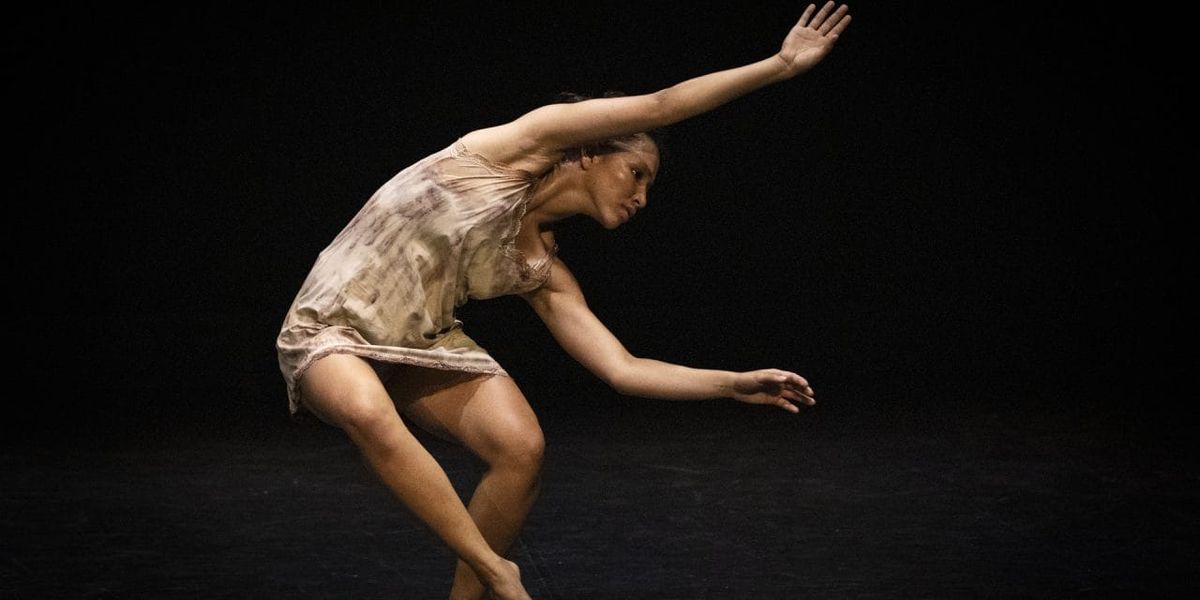
‘We do not have a body, we are a body,’ wrote philosopher Maurice Merleau-Ponty (Phenomenology of Perception, 1945). The human body, after all, is not an object but the subject of our experience. It is the archive of what we have lived and, therefore, the very substrate of individual identity. The investigation of one’s own identity through movement is among the most explored, and most complex, tendencies in contemporary performance spaces. The work presented in 1|2|3 Solos & Duos moves precisely in this direction. The young artists involved use gesture and space to dissect their being and their lived experience, exposing it to the audience’s gaze. Naomi Perlov herself, artistic director of the project, explained during the exchange day with the dancers at DanceHaus that, across the five solos and three duets that make up the programme, the focus lay on reworking the performers’ individual realities. The Suzanne Dellal Dance Centre, after all, was founded precisely to train the new generation of dancers in Israel.
On the bare stage unfolds a kaleidoscope of ways of investigating reality, filtered through the individuality of choreographers and dancers. Some employ disjointed gestures and an almost tribal energy, perhaps set in contrast to the delicate notes of Debussy. Others move tirelessly in an exploration of space. Some appear to act against their own will, while others resemble unconscious automatons. What emerges is a wide range of physical and gestural codes moving through a musical landscape rich in quotations, suggestions, and interferences. The probing nature of the performances addresses delicate themes such as personal struggles and cultural legacies. Choreographer Nur Garabli, the only Palestinian in the collective, in her striking solo Seventythree, moves through dabke, painting, religious and folk music, all animated by the powerful presence of performer Miso Samara.
A markedly different compositional approach is adopted by Dana Sapir. In the two chapters of her multimedia work Point of You, she uses the narrative of an encounter between two isolated human beings as the score for the movements of the solo, a surreal walk through the liminal space of a person left alone ‘at the folding point of the universe’, and of the duet, in which the dialogue between an acrobatic performer moving within a suspended circle and another moving on the ground culminates in the impossibility of truly touching one another.
The lighting design closely follows the poetry of gesture, in perfect continuity with, and resonance of, the performance itself. In the duet Object M, for example, the dancers Ron Cohen and Elie PolyRock Haddad begin physically connected, constructing interdependent movements. At a certain point they separate. The spotlights trace two parallel rectangles on the floor, delimiting the space each dancer is allowed to inhabit. The performers are thus rigidly separated and never dare to cross their boundaries.
Particularly incisive, finally, is Oxytocin, featuring Gil Elgrabli and Tamir Golan. Man and woman constantly exchange the roles of puppet and puppeteer. Each directs the other’s movement with a brutality that seems born of resentment, of pain that has hardened into hatred. This malicious game of a dysfunctional couple, in which one partner’s suffering becomes the other’s pleasure, is interrupted only by a hollow, prolonged laugh, heartless and seemingly endless. It is the choreographic mirror of a shattered, tormented love that, in turn, succeeds in tormenting the audience.
What ultimately unites the expressive and thematic diversity of the works is a shared tendency to move away from virtuosity as an end in itself, making room instead for a research-driven and evidently genuine experimentation. What takes shape is a laboratory-dance, in which gestures, once stripped of the constructions and superstructures of a globalised everyday normality, emerge and flow with complete autonomy and freedom.
Anna Farina, Alessandro Stracuzzi